
The stock market is the most well-known place to invest. It is fast-paced. It is glamorous. Millions of dollars are made and lost every minute the market is open. It can be intimidating to get started, but once you get a grasp on how it works, you will understand why there is no reason for you to be afraid to invest in the stock market and get your fair share of the gains. Hopefully, this will be the complete beginner guide you need to jump into this multifaceted topic.
The History of the New York Stock Exchange

Stock investing and trading has been around for hundreds of years, but a formal stock market was only an idea in the late 1700s. The NYSE can be traced back to May 17, 1792. On that date, 24 stockbrokers gathered under a tree outside of 68 Wall Street in New York and signed the Buttonwood Agreement (you can see an image of the documents here).
At that time, the modern Wall Street we think of today was a long way off. The original brokers of what was then called the New York Stock & Exchange Board bought and sold portions of companies from one another, without any auctioneers, and charged a .25% commission on each trade.
Over the last 200+ years, the market has transformed from one of person-to-person trades to a primarily electronic interchange. The 24 original brokers gave way to owners of 1366 coveted seats, which sold for up to $4 million in 2005. Today, traders can buy a floor trading license for $40,000 per year.
In 1995, the all-paper trading system began to accept electronic trades. Today, the majority of all trades are electronic. Starting in 2007, customers could enter their own orders electronically, via their broker, for instant electronic trades via the NYSE hybrid market.
In 2007, the NYSE merged with Euronext, an Amsterdam-based exchange operating in Belgium, France, Netherlands, Portugal, and the UK, to create NYSE Euronext, now the largest stock exchange in the world.
What is Stock?

Simply put, a stock is small ownership in a publicly owned company. When companies wish to raise funds, they sell a portion of the company to investors. That ownership is represented by shares of stock.
A small, private company owned by two members of a family may not have formal shares, though each family member would be considered to own half of the stock. Companies with more investors are likely to have more formal documents defining each party’s ownership.
As companies grow, their valuations generally increase. Each time a new investor puts money into the company, the two sides negotiate the value of the company and how much of the company will be sold to the new investor. This is best known for taking place with startup companies and venture capital firms, though many other types of investors exist.
Once a company hits a certain point, its owners may decide to hold an initial public offering (IPO) of the company’s shares. When this happens, any investor, large or small, can purchase shares of the company through an organized stock market like the NYSE or NASDAQ.
When a company goes public, they can raise a lot of money very fast. A recent, and infamous, IPO made Facebook a public company. On the day Facebook went public, it raised $16 billion in funds and made the owners very, very rich. The largest IPO ever raised $17.9 billion when Visa went public in 2008.
Day-to-day decisions of public companies are left up to a CEO and executive team, but the overall direction of the company is determined by an independent board of directors charged with representing the investors’ best interests. Shareholders are given the right to vote on the board of directors and other major decisions at an annual meeting or via a proxy ballot.
Corporate executives and board members are required by law (in the United States) to do everything possible to maximize shareholder value. When you cast your vote, you are giving those leaders the make the best business decisions on your behalf.
Preferred Stock
Common stock is the standard stock that most of you think of when you think of the stock market. Each share entitles you to fractional ownership and vote in a company. It may come with a dividend payment. It allows you to enter the company’s annual meeting and submit shareholder resolutions. Preferred stock, however, is very different.
Preferred stock is more like perpetuity paid by a company than a standard share of stock. The key differences of preferred stock, in general, are that it does not give the owner a vote and it pays a fixed dividend.
For investors nearing retirement, preferred stock can be a very good income stream. If a company has to stop paying the dividend on common stock, the shareholders are out of luck. If a company suspends a dividend on preferred stock, it is generally required to make catch-up payments at a later date.
There are risks to preferred stock. In many aspects, it is treated as a bond with no repayment date. Some preferred shares may be callable, meaning the company has the right to buy the stock back whether you like it or not. Or they may be convertible, meaning the company can turn the preferred shares into common shares if the board of directors votes to do so.
In the event, a company fails and assets are liquidated, bondholders are the first to be paid. Once all debts are paid, preferred shareholders are paid back for the value of their stock with any leftover funds. If any money is still left after that, the funds are divided up among owners of common shares.
Preferred stock functions more like a bond than stock in many ways. Because of this, preferred stock may be rated by the major debt rating agencies, such as Moody’s and Standard and Poor’s. Those ratings help you judge the viability of continued payments.
I do not own any preferred stock, but I am not opposed to doing so in the future. It is important to keep a diversified portfolio, and preferred shares are a great tool to stay diversified as you near retirement or hope to avoid market volatility. You can buy preferred stock through your stock broker similar to any other stock transaction.
How Stocks are Traded on the Stock Market
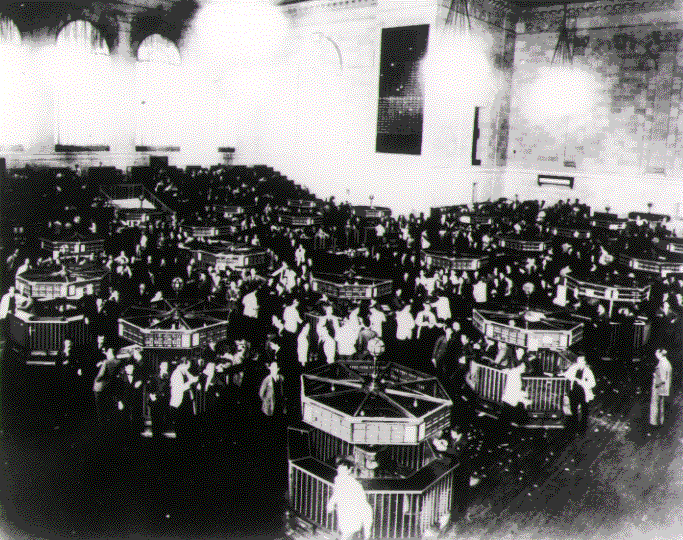
In the old days in 1792, the stock trade was a fairly straightforward process. The broker representing a shareholder who would like to sell a stock would talk to other brokers and find a broker looking to buy. They would negotiate a price and make a deal. The buyer would pay and the seller would receive stock ownership certificates.
Like most of the financial system, today is a lot different than in 1792. However, the principle is the same.
If you have ever bought or sold stock, you know that you have to do so through a stockbroker. The stockbroker has access to sophisticated systems that link into a series of exchanges that execute the trade. Most of us never think about those systems and exchanges, but I was just there and I thought it was interesting. Here is how a stock trade works from the buyer’s side.
Example of a Trade Circa 1980
In the old days, Joe would call up his stockbroker and say, “Mr. Stock Broker, buy me 100 shares of Citi.” At that point, the broker would call his trading desk and tell them to buy 100 shares of Citi for Joe. The trading desk would call their floor trader at the New York Stock Exchange, and that trader would find someone who wants to sell 100 shares of Citi. Those people would meet at a spot on the floor where a specialist is posted for that stock and the two traders would agree on a price.
If no one was selling, then Joe’s trader would just buy the stock from a specialist who keeps an inventory of Citi in case anyone wanted to buy it but couldn’t find a seller. Once an agreement was made on the price, the trade would take place and Joe would be the proud owner of Citi. Joe’s broker would keep the stock in his account until he wanted to sell it or transfer it to another broker.
Example Trade Circa 2015

Now, things are a bit different. If Joe wants to buy a share of stock, he logs on to his stockbroker website. If he wants, he can still pick up the phone and make a call, but the fee for doing that is usually about $20 higher than doing it online himself.
If Joe knows he wants Citi no matter what the price is, he can just type in that he wants to enter a market order for the stock. At this point, the computer system will link into the NYSE-Euronext system and look at current sellers of Citi. The system matches buyers and sellers automatically. For small orders, this all happens with no additional human intervention.
Once the trade executes, your stock broker’s system will credit the shares to your account. This generally takes two or three days to happen, as there is still a settlement lag time for the assets to transfer from the seller’s account to the seller’s broker to your broker to your account.
While you will most likely never come across this situation, it is important to know that some trades still can happen directly between two people (or companies). This most commonly happens with very large trades between institutional investors.
The stock market has many, many more nuances, rules, and procedures. How does this really impact you? It does not unless you work on the stock market or are a serious active trader. However, it is good to know how the system works to make sure you are really in control of your investments. As a perk, you can impress your friends by telling them about the bid-ask spread over drinks tonight. (Disclaimer: Unless your friends are finance nerds, they will not think this is cool.)
All trades are not instantly executed and filled when you enter an order. You are also allowed to enter order conditions, which are explained below. Very large orders may take some time to complete and will trade at multiple price points. Those very large trades are generally only made by/for institutional investors.
Types of Orders
Market Order
A market order is the most basic order type, and probably the most common. With a market order, your trade will execute at the current market price, whatever that may be. If you want 100 shares of Walmart (NYSE: WMT), you will get 100 shares of Walmart at the current market price.
Limit Order
A limit order allows you to define a maximum purchase price or minimum sale price for an order.
Let’s say you want 100 Walmart shares and Walmart is currently trading at $75.00 per share. You think Walmart is a great company to buy, but you think $74.75 is the most you would be willing to pay. With a limit order, you can set the order to execute at any time in the future if Walmart is at $74.75 or lower. If the stock only goes up, you will never get it. If it goes down, for either a brief moment or longer, to your price, it will execute.
A risk is that if you set order like this and forget about it, you might buy it on the way down to $70, $60, or below. Always stay aware of your open orders and what is pending in your account.
You can use the same logic for a sale. If you own Walmart at $75, and you want to sell it if it reaches $77, you can set an order to sell if the stock hits $77 or above. However, if it hits $77 on the way up to $85, you miss out on the upside. If you think it will quickly hit $77 before dropping lower, then it is a better deal for you.
With either type of limit order, understand the risks that your order might not execute, or it might execute in a way that doesn’t benefit you as much as a market order may have.
Stop Loss
A stop, or stop-loss, is an order that does exactly what its name implies. It stops a loss automatically.
If you bought Walmart at $50 and now own it at $75, you might be ready to lock in your profit but still want to ensure you take advantage of potential upside potential. To do so, you could enter a stop order that would sell if it falls below a specific price. If you enter a stop at $70, and the stock drops to $71, you still own it. If it drops to $68, it would have already sold at $70.
The biggest risk of a stop is that the stock price will drop low enough for the trade to execute, and then jump back up to a higher price. If you had a stop at $70 and the stock drops to $69.99, your trade executes. If you purchased the stock at $75, it drops to $68 (sell automatically executes), then jumps to $80 the next week, you lost $5 per share and missed out on the $10 per share upside gain.
How to Buy and Sell Stock
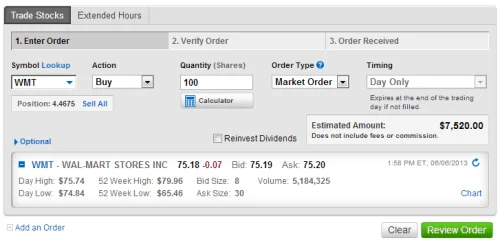
Now that you know what stock is and how different trades work, let’s walk through buying stock for yourself.
First, you need a funded brokerage account. I personally use Charles Schwab, but you can also look to companies like Sharebuilder, Scottrade, TradeKing, Fidelity, or E-Trade. For brand new investors, the best place I have found to invest is Loyal3. Through that brokerage, you can buy and sell stock starting at $10 with absolutely zero trade fees.
When choosing a brokerage, I suggest finding a discount broker that offers free research, stock information, and cheap online trades. Also look into customer service reviews and what they allow you to buy and sell (stocks, mutual funds, bonds, IPOs, etc).
Schwab lets you buy and sell for $8.95. Each broker has slightly different fees, so shop around before you choose. I also like that Schwab offers a list of mutual funds and ETFs with no transaction fees.
Once you pick an account, link it with your checking account and add funds. I suggest adding enough to buy stock in $500 increments or more. If you buy $200 of stock, you need the investment to go up by 10% just to cover your trading fees. If you buy $500, you only need the investment to rise by 4% to cover your fees. If you buy $2,000, the stock only has to increase by 1% to cover the fees.
Once you fund the account, buying and selling is an easy process. It just takes a minute to enter a trade online.
Knowing When to Buy and Sell Stock
Everyone knows that old saying that the key to investing success is to buy low and sell high. While any dummy can understand the importance of that, putting it into practice is much more difficult. The two major schools of thought for predicting stock movements are fundamental analysis and technical analysis.
Technical Analysis
Technical analysis uses historical pricing to predict future movements of a stock’s price. Commonly, technical analysts will look at the moving average of a stock over a fixed time period, such as 50 day, 100 day, and 200 day, to establish a baseline price and maximum price to build a range for the stock. If it hits the baseline, many traders believe that the stock can only go up. If it hits the top of the range, they believe it can only go down.
Note that I refer to people that follow this method as traders, as opposed to investors. As a general rule, people who focus on technical analysis are not buying stocks for the long run; they are looking for short-term wins. I personally rate this method just a step ahead of gambling. Most day trades and short-term sales are all based on technical analysis, which does not take into account how the company’s financial situation (fundamentals) and the overall markets are doing as a whole.
My preferred technical indicator when reading technical analysis charts is Bollinger bands. Created by John Bollinger in the 1980s, Bollinger bands create a low, middle, and upper band based on the volatility and moving average of the stock.
Just remember, if you are looking at technical charts, your investments are based on stock market trends. We all know that the past might be helpful but is not a sure bet in predicting the future.
Fundamental Analysis
Fundamental analysis looks at a company’s current and projected (Pro-forma) financial situation to decide what the company is worth today. Most mutual fund managers use fundamental analysis for their purchase decisions. Warren Buffet’s value investing strategy is also based on a company’s fundamentals.
The main inputs for fundamental analysis are the balance sheet and income statement. Those statements, released quarterly by each public company, tell about the financial health of the company. Using those statements, analysts build predictions of future growth and performance. Those Pro-forma statements are based on industry trends, company trends, the economy, and major news impacting the company’s business.
Once a Pro-forma balance sheet and income statement are created, the most common valuation for a company is a free cash flow analysis. Investopedia defines free cash flow, often referred to as FCF, as operating cash flow minus capital expenditures. A free cash flow is discounted based on a company’s risk level to create a total enterprise value. Divide the company value by the number of shares of common stock outstanding to find the intrinsic value of a share of stock.
If the intrinsic value of a share is higher than today’s market price, it is considered a “buy.” If it is within a very close range, it is a “hold.” If it is below the market price, it is given a “sell” rating. Some investment analysts have more rating categories and use different names, but they are essentially giving you this information. For example, outperform, market perform, and underperform correlate to buy, hold, and sell respectively.
Avoid Trading with Emotion
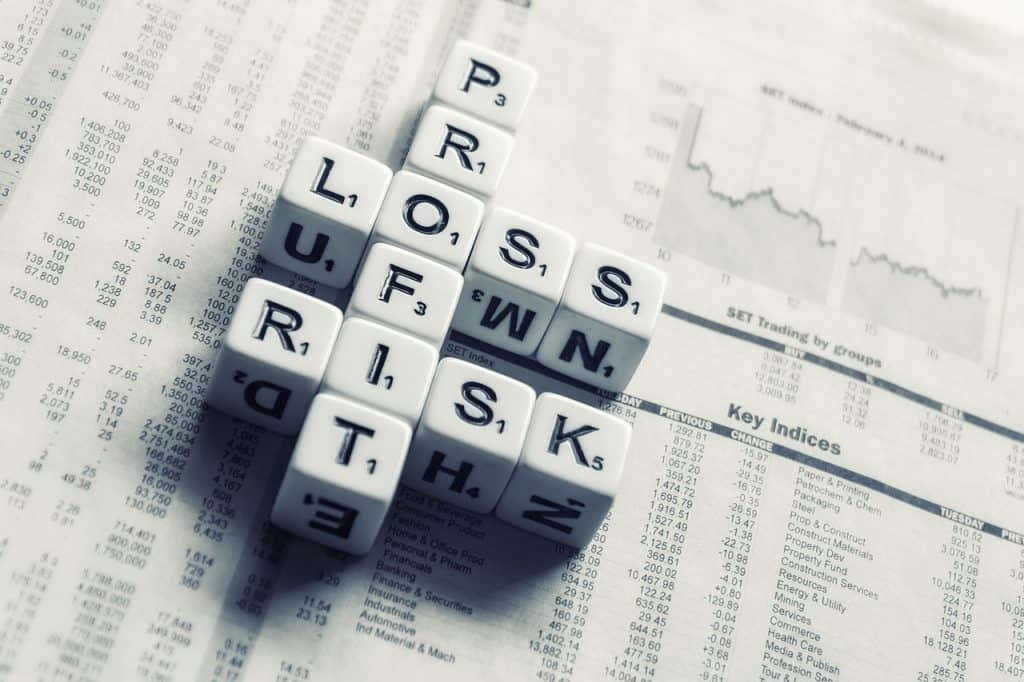
One thing to completely take out of the picture is trading with emotion. This usually hurts your personal profitability. Emotional investing leads to stock market crashes, selling at the wrong time, and buying at the wrong time. If you have done well with stock and want to keep the profits, it is best to decide if the stock is still undervalued. If it is, why would you ever sell? The same goes for buying. If a stock has done really well recently, it is generally a bad time to buy it. You already missed the big gain and will lose money if it goes back down.
Whenever you are going to click the buy or sell button, don’t think of what you have already gained or lost unless you are taking taxes into account. What has happened is done. Those are sunk costs. Only buy and sell based on the future.
On January 21, 2010, I, Eric Rosenberg, made a bad stock trade. Given that, I still made a bunch of money but had I not let emotions get involved I would have made more money. Here is the story, as told on that fateful day in 2010:
I bought BRK.B about a month ago for $3,404 per share. Over the last month it dipped down below $3,300 and slowly came back. I bought it because I knew it was going to split 50:1 in the near future, and I wanted to capitalize on the price increase I (correctly) expect would happen.
Yesterday the split was announced. The stock was way, way up. This morning it split again. It went up more. The market opened, it went up more. I put in a stop order, it touched it for a second and went up more. So, I locked in a profit of over $200, but it could have been more.
I traded on emotion. I was so excited that I was right, I had to lock in my profit shortly after the market opened. That was around 9:45am Eastern, 15 minutes after the market opened. Had I been patient and set things up correctly, I could have made an extra $100.
But then it went back down. I ended up buying it back for $0.80 less than I bought it for. Good deal right? I did it again. I got impatient and sold it for a modest gain. Had I been patient, and let emotion take a back seat, I would be up an extra $0.50 per share right now. That is a lot with 50 shares.
So, I made about $220 after trading fees. Not a bad day. If I could do that every day, my personal finance would be in pretty good shape. But I did learn a valuable lesson. Be calculated and leave emotion at the door when you are buying and selling stocks.
Here is another bad stock trade story. This time, I ignored the message that it was time to sell because I really liked the company.
It was a purchase of WWE (NYSE: WWE). I used sound analysis to decide to buy the stock, and it went up and up. While patting myself on the back for making a good buy, I ignored the signs of pending declines because I am a wrestling fan and I was proving myself right by holding on. Bad choice. The stock went down and down before I gave in and admitted defeat. I lost both my gains and then some more before I sold.
What Should You Do?
I think the best method for deciding when to buy and sell is to conduct a fundamental analysis yourself and take the technical analysis into account as a secondary valuation method. If you think a stock is wildly undervalued, it is probably a good idea to buy it even if it has trended down lately. I always rank fundamentals ahead of technicals.
You are never going to be right 100% of the time. I just stick to my intelligence, not my emotion, and trust that my analysis is correct while focusing on the long-term. So far, it has worked pretty well for me. I hope you have the same luck success as me.
Tracking Stocks Online
While I suggest new investors always buy diverse funds like an S&P 500 index fund to start, if you are building a larger portfolio and want to try your skill in picking individual stocks, it is important to keep track of your investments. Each investment tracking site is different, so be sure to pick the one you like that has great features to stay ahead on the news in your portfolio.
Your Stock Account
Your stockbroker does more than help you buy and sell stocks. Full-service brokers all offer online tracking, news, and research options. The features available to you depend on your broker. I use my brokerage account to check out buy and sell dates, unrealized gains, and losses, and for basic research before buying a new stock, mutual fund, or ETF.
Empower
I know I write about this site a lot, but seriously, what can’t Empower do? The free site does a lot more than just track your account balances, transactions, and net worth. Empower is packed with tools just for investors. I saved over $300 per year on my mutual fund fees thanks to Empower’s free investment analysis tools.
After you sign up for a free account, add your investment accounts and head to the portfolio and investment checkup tools (under the investing menu). The tools will give you updated information on your individual investments and portfolio distribution and risk with ideas to improve your investments to match your goals and investing style.
Google Finance & Yahoo Finance
Google is all about information, and Google Finance gives you lots of information quickly. While the site can’t import your portfolio automatically like Empower, it has more up-to-the-minute news and data that you can use for short-term decision-making. Google Finance is free and anyone with a Google account can enter stocks and funds to track and monitor. The site also gives you news and other info live as it happens with flexible charts and other details on each investment in your portfolio.
Yahoo Finance was long the online leader in tracking your financial information, and it still boasts many great features that keep longtime users happy and dedicated to the free service. Under new management, Yahoo is on a huge push to get you back for search, news, and original content. They keep their flagship finance tools up-to-date to keep you coming back for more charts, news, and other stock market data.
Dividend Paying Stocks
Some companies pay a portion of their profits out each quarter to shareholders. These payments are called dividends.
When you are searching for stocks to buy, you have the option to look at stocks that have dividends and stocks that do not have dividends. Your gut probably tells you that dividends are good because your stock is paying you. However, when you run the numbers non-dividend stocks may be a better deal.
Unless you are in retirement or want to use your investments for cash flow, it is important to be clear about your investment goals.
When you buy a stock, you buy it to earn a return. If you buy a stock for $10 and it goes to $11, you made a 10% return. If you buy the same stock for $10, it pays a 10% dividend, and the price is flat but you reinvest the 10%, you also have $11. How you get that 10% does not really matter as long as the value increases.
Example of Non-Dividend Stock Success
Warren Buffet has never paid out a cash dividend in his history as CEO of Berkshire Hathaway, one of the best returning investments ever in the stock market. Buffet made it clear at a past annual meeting that the company has no plans to pay a dividend in the near future.
Buffet believes that he can generate a higher annual return for investors by investing the profits than paying out a cash dividend. And he has been right. Just look at a comparison of the S&P 500 yield, including dividends, compared to Berkshire Hathaway. In the time that the S&P 500 returned 350%, BRK has returned 2,200%.
Sometimes Dividend Stocks are Best
The reason everyone has heard of Warren Buffet and Berkshire Hathaway is that they have done something amazing that very few companies have ever done before. In many cases, a company can’t give investors a better return than by paying out profits. In those cases, they should pay a dividend instead of reinvesting in the business.
Dividends are great. I get dividends on most of the stocks I own, but I reinvest them in the stock. If it is worth owning, it is worth owning more of. That way, my return goes back
How Stock Splits Work
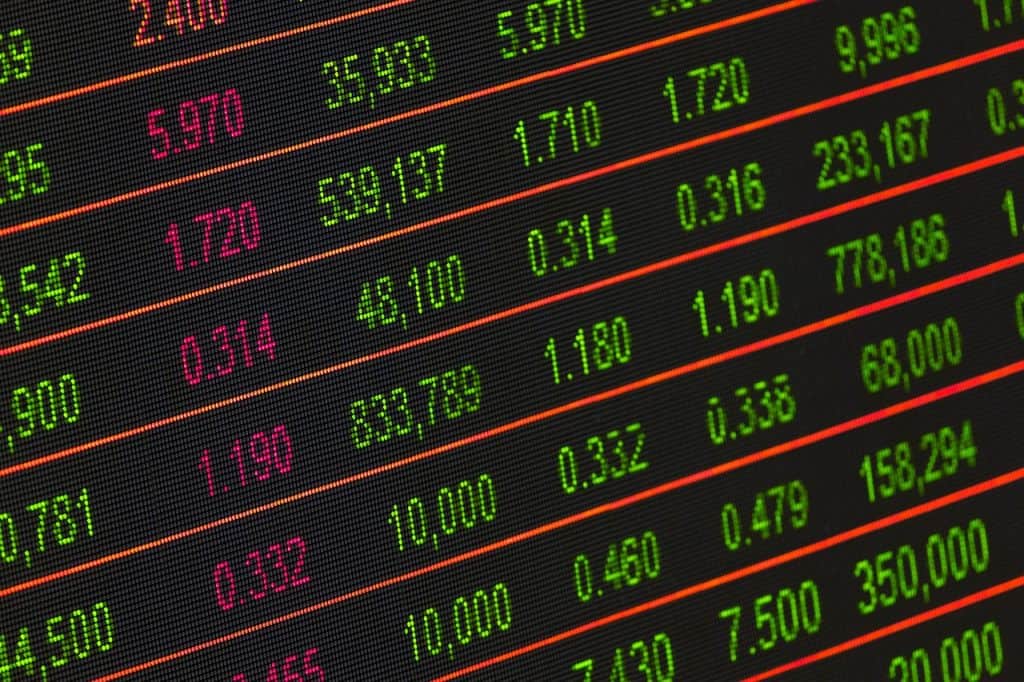
This is not news to any of you, but stock prices rise and fall over time. Those increases and decreases generally correspond to company performance and the overall economy. Over time, if a company does very well, its stock will rise, and continue to rise. If it does poorly, the price will fall. If it falls too low, the company risks being delisted from major exchanges or being bought by another company.
When Prices Get too High
Some companies enjoy having high stock prices. Tech giant Alphabet (formerly Google) (NASDAQ: GOOGL) trades well over $500. Berkshire Hathaway (NYSE: BRK.A) has an A share price of over $150,000.
Most companies, though, prefer to have more liquidity in their shares. When a stock is well over $100, many investors may erroneously believe the stock is “expensive” or not be able to afford to buy it in their portfolio. To increase liquidity and promote higher trading volumes, companies may engage in a stock split.
For example, let’s say a stock is priced at $100 per share and management wants to increase liquidity and decides to split 3:1. The company will issue new shares to lower the price and will give existing holders new shares so their holdings are not diluted. If you own 10 shares at $100 each, after the split you own 30 shares at $33.33 each. Your total investment value is the same, but it may now be easier to sell your shares quickly or accumulate a round lot (a traditional investment of 100 shares).
When Prices Get too Low
If a company’s share price is below $1 for a length of time, the major exchanges will de-list the stock. That is bad for a public company, so a company may go through a reverse split to raise the stock price. Not long ago, Massachusetts-based NeuroMetrix (NASDAQ: NURO) was threatened with delisting. Management performed a 1:6 reverse split. This took the stock from $0.4776 per share to $2.87 per share.
Reverse splits are looked down upon by the investment community. It shows that a stock has performed poorly and the management does not believe it is able to raise the price through business performance.
My Big Stock Split Profit – Investors Can Be Stupid
According to fundamental analysis, a company has an intrinsic value. Divide that value by the number of shares, and you have a target stock price. A split does not change the intrinsic value of the company and should not lead to a change in market cap. But sometimes it does.
I knew that when Berkshire Hathaway B shares split 50:1, a lot of people that couldn’t afford it at $3,500 per share would want to get a piece of Warren Buffet’s company at $70 per share. While the value of the company would not increase, the demand for the shares would.
I was right. If you look at a stock chart for BRK.B from early 2010, the stock took a huge jump when it split, making me, and other astute investors, quite a bit of money. Not all split stories work like this, however, so be careful speculating on the future share price after a split or reverse split.
What are Stock Options and How Do They Work?
In 2010, I had an unexpected and pleasant surprise at work. I was awarded stock options for 700 shares pricing in March 2010. The options vested 33.3% per year over the three years.
It is exciting to be awarded options. This ties compensation to the company’s performance. From the company perspective, it is better to have employee compensation tied to company performance, as employees may work harder to ensure the company is successful.
Here is how employee stock options work, using my situation as an example:
- First, I am notified that I will receive options. I was given the number of shares and the pricing date for the options.
- On the pricing date in March, my options are given a fixed value per share. This is tied to the market price on that date. The price is called a strike price.
- Every year for the next three years, a portion of those options become vested, or available for use.
- If the market value of my company stock is higher than the strike price on any date past the vesting date, I have the option to buy shares of the company stock at the strike price. If the price is higher than the strike price, I can sell immediately for the market price and keep the profit. If it is below the strike price, the option is “out of the money” and I will not exercise the option.
As you can see, the mechanics of options depend on the market price compared to the strike price. No one would ever exercise options “out of the money,” because they would have to pay for the stock at a price higher than the market price.
While employee options have similar mechanics to buying and selling options on the market, there are many differences. Do not use this as a guide to buy and sell options.
Buying Stocks on Credit: Margin Trading

Have you ever heard about people making, or losing, a lot of money quickly by trading on margins? If you wondered what that means, grab your reading glasses and some popcorn. It is time for Margin Trading 101.
Investopedia gives a good introduction to the idea of how margin trading works on the surface:
Imagine this: you’re sitting at the blackjack table and the dealer throws you an ace. You’d love to increase your bet, but you’re a little short on cash. Luckily, your friend offers to spot you $50 and says you can pay him back later. Tempting, isn’t it? If the cards are dealt right, you can win big and pay your buddy back his $50 with profits to spare. But what if you lose? Not only will you be down your original bet, but you’ll still owe your friend $50. Borrowing money at the casino is like gambling on steroids: the stakes are high and your potential for profit is dramatically increased. Conversely, your risk is also increased.
When you trade on the margin, you are borrowing cash from the brokerage firm to use in the stock market. To trade on margins, you will need to be approved by your brokerage. I would not do this unless you are super rich and can afford to lose 75% of what you borrow. I would never short sell or buy anything other than large-cap equities (stocks), but that might just be because I am afraid of losing everything I have.
When someone is set up for margin trades, they are given a limit (like a credit limit) and terms for what is essentially a loan. To explain how it works, I will give an example of what an investor might go through when borrowing and investing on the margin. These are completely made-up numbers and do not necessarily represent fair or realistic terms. I am just using round numbers because they are easy:
Joe Investor has an account at Online-Broker-Company (OBC). Joe has a portfolio of $500,000 in an account at OBC that is invested with $400,000 in stocks, $50,000 in bonds, $10,000 in options, $30,000 in mutual funds, and $10,000 in cash. Joe has had the account with OBC for five years and is an active trader (10+ trades per month).
Joe is doing some fundamental analysis and finds that stock XX is worth $20 per share, but is trading at $10 per share. He also finds, using technical analysis, that the stock is likely going to trend upward over the next few days up to $17 per share. Because he only has $10,000 in cash on hand, and he is certain of his estimates, Joe borrows funds from OBC that allow him to invest as much as possible into the stock.
Joe is required by OBC to invest 20% of his own funds for any margin buy, that is called the margin requirement. Therefore, Joe can borrow up to $40,000. Joe is approved by OBC for the margin purchase and is allowed to purchase $50,000 in stock XX with the $10,000 in his account. He is also required to maintain a portfolio of at least $50,000 at the company as collateral in case the stock price goes down to zero. He is considered to be 80% leveraged at this point.
The stock goes up to $25 per share and Joe gets greedy. He could sell the stock and take the $15 per share, or 150% profit, and leave the transaction that cost him $10,000 with $125,000. Joe doesn’t. He decides, despite his analysis that the company is worth $20 per share, to stick it out.
The next day company XX goes bankrupt. No one saw it coming. The stock plummets in one hour to $1 per share. All of a sudden, Joe’s $50,000 investment is worth $5,000. He not only lost his own $5,000, but he also owes OBC $40,000 that he borrowed. OBC will initiate a margin call, which is a request for Joe to give the firm the cash needed to bring his margin rate back to 20%. Because of the large loss (90%), he has to come up with a lot of cash quickly. If he can’t, OBC will sell $35,000 of Joe’s other investments and take his $5,000 cash to cover their loss.
This example is extreme, but it is possible. Margin trading can give you a huge payday or a huge loss in very little time. Your investment company is not the mafia and will not cut off your hand or kill you for losing their money, but you are legally responsible for paying them back. If you try to take your assets and run, they can sue you and will win, for the amount of their loss.
Getting Your Feet Wet Without Financial Risk
If you don’t have the money to get started investing, or you want to give it a try with play money before you put in the real deal, there are great options for stock market games to try your strategy before you implement it.
Here are a few stock market game websites you can join:
Another great option is to get started with very little risk by only making small investments. Normally trade fees get in the way of small investments, but I have an account with Loyal3, a new stock brokerage firm that offers trades on a growing list of companies (currently about 60) with zero buying or selling fees. If you can buy and sell with no fees, there are no hurdles to get over to break even when buying and selling small amounts of stock. Listed stocks include Berkshire Hathaway, Walmart, Starbucks, WWE, Facebook, Google, Apple, Disney, and many other consumer brands.
Build a Diverse Portfolio with a Long-Term Focus
The markets have good days and bad days. It is important to build a portfolio no matter what the markets are doing. In the long run, daily gains and declines don’t matter. All that matters is how your investments fare over the long-term horizon.
Day trading is just like taking your retirement fund to Las Vegas and letting it all ride on black. You may double up your money, but you are just as likely to lose it all.
Every time I buy a stock, I follow Warren Buffet’s strategy. I try to find solid companies with a stable outlook for the future. Value investing is all about finding companies that are undervalued and have strong growth potential.
Asset Diversification
Remember to diversify your investments. If you are only invested in one stock or one industry, you are not diversified. Even some mutual funds are not diversified, as they target one type of investment.
To ensure you hedge against losses, it is important to have more than one stock. If all or a large portion of your portfolio is in one stock, and that company has bad news or poor results, your entire portfolio will go down. If each stock represents 10% or less of your portfolio, you only have a small portion at risk if one stock has a bad performance.
The same goes for industries. If all of your stocks are in the airline industry, auto industry, oil and gas industry, or technology industry, and that industry has a problem, your entire portfolio will be impacted. You don’t have to go far into history to see when the dot com stocks all took a turn down together.
Remember, diversification means both companies and sectors. If you buy 4 oil and gas companies, and oil and gas prices plummet, your whole portfolio is impacted. Make sure to diversify as much as possible. As the saying goes, don’t keep all your eggs in one basket.
When building my portfolio, I chose to start with solid, blue-chip stocks like Walmart, General Electric, and The Coca-Cola Company. I also branched out with investments in companies like Boeing and Phillip Morris International. I didn’t have a big portfolio on day one. It took time to save and invest in a larger group of companies to achieve better diversity. I’m not done, and never will be. It is always important to keep your eyes on your stocks and try to understand the outlook of the companies in which you invest.
Another option to diversify is through ETFs or mutual funds. I recently purchased the Vanguard Equity-Income Fund (MUTF:VEIPX) in my Roth IRA. That fund has 164 holdings, so buying one fund with low fees gave me easy diversification in large companies that I like for investment returns. If you buy mutual funds or ETFs, be sure to check into the fees and costs before investing.
Building a Portfolio of Single Stocks Isn’t For Everyone
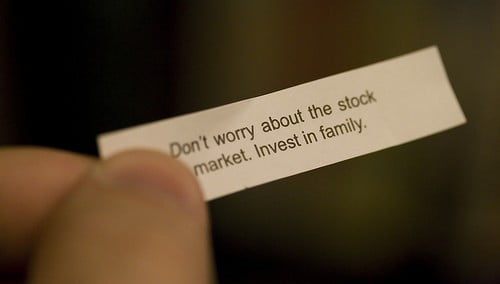
Anyone can buy and sell stock in individual companies, but it isn’t something everyone wants to do. Some people are worried about losses. Others don’t care to spend the time to make informed decisions and would rather have someone else do it. If you are not interested in buying stock, that doesn’t mean you can’t invest in the stock market.
I suggest most investors choose mutual funds or ETFs to build a solid retirement portfolio. I use Empower to help manage my diversification and fees. I hold several funds from both Charles Schwab and Vanguard that help me meet my long-term retirement goals. Whether you are starting at 40 or starting at 20, make sure you are always saving for your retirement.
How to Start
If you do not have any investments yet, start by opening an account at a quality discount brokerage. I use Charles Schwab myself, but there are other great options like Fidelity, Scottrade, or eTrade. From there, learn all you can and start making good investment decisions.
If you are very new, you can read my in-depth guide to how the stock market works. You should also read up on how dividends work, what a share of stock represents, passively investing in stocks, and understand when to buy and sell stock.
If you’re even newer than that, before starting an investment plan be sure to assess your current financial situation. Do you already have a budget? Do you have a full-time job providing you a steady income, or are you a freelancer, or starting a side hustle working as a podcaster? Whether you’re an entrepreneur, a self-employed blogger, or an aspiring real estate mogul, figuring out your risk tolerance and time horizon before jumping into trading stocks is very important.
I like saving with low-cost automatic investments. You choose where the investment goes. I would start with one stock or fund that you like. Make investments into that fund at a regular rate ($50 a month? $25 per paycheck?) that you choose and will stick to. Once you hit a pre-determined investment level in that company (in dollars), you should switch to a new investment. Keep going indefinitely. Eventually, you might invest more into companies you already have stock in, but never stop investing.
By the time you are ready to retire, you will have a nice nest egg to fall back on, aside from your 401(k) that is.
Your Investment Questions?
Download this entire guide as an eBook below!

This post was originally published on October 19, 2015, and updated on June 6, 2021.
This is a great guide Eric, takes a ton of effort to put it together. How do you think about investing in the stock market vs. in real estate? Do you favor one over the other?
I’m a big fan of real estate investing. It is much easier to start with stock market investments, as the cost and work to get started is much, much lower than real estate. In the long-term, a well balance financial plan can certainly contain both!
If you want to start with the best of both worlds, don’t forget REITs!