
Almost everyone knows that you can buy and sell stock in a company, but a lot of people don’t fully understand what a share of stock represents.
Growing Companies Need Funds

As companies grow, they need more financial resources to support their business. Sometimes, they need the money to hire staff. Other times, they need resources to buy equipment or develop products. Either way, for many businesses to scale, they need additional funds.
Companies have several options to raise money. First, and most common for small businesses, is for the owners to put in more of their own money. If the owners do not have enough money on their own, they can approach a local bank for a loan. However, both of these methods generally have a limit.
Beyond personal resource and a local bank, many companies turn to outside investors. Angel investors or venture capital firms invest in companies for a share of ownership. These off-market transactions are privately brokered and usually bring millions of dollars to the business.
Once a business reaches a certain size, it can look to the general public for funding. Some companies choose debt financing. In that case, the company would issue bonds, borrow money from investors, and pay it back with interest.
Other businesses choose to issue stock. When a company issues stock, it is allowing the public to buy a small share of the company. In exchange for selling part of the company, it receives investor funds.
IPO – Initial Public Offering
IPOs often get a lot of media attention. The most reported IPO in 2012 was when Facebook (NASDAQ:FB) issued stock to the public for the first time. Despite the media hype, IPOs are a very important part of large company finances.
When a company goes public, an underwriting firm advises the company on its intrinsic value, or the total value of the company. Based on that valuation, the company will decide what percentage ownership it wants to make public. In the Facebook example, the company’s May 16th, 2012 filing indicated that it would sell 421.2 million shares. Mark Zuckerberg, the founder of the company, would retain 503.6 million shares, or about 31% of the company. The public would only be getting about 25% of the company for $16 billion. That would give the total company a valuation of roughly $64 billion.
We all know that the IPO did not go as well as planned. There are big risks in an IPO. What did happen, though, is that Facebook did sell a lot of shares and raised a lot of money. At the end of the first day of trading, shares were valued at $34.03 each. For $34.03, you could buy one share of ownership in the company out of about 1.6 billion. That $34.03 gave you a very, very tiny ownership in the company.
Secondary Market Trading
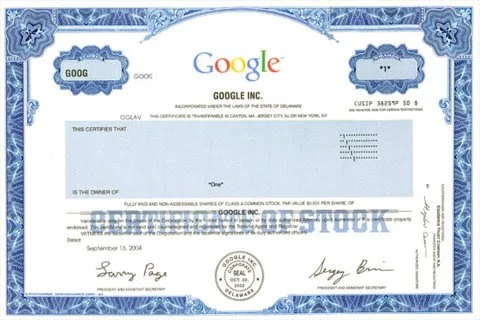
After an IPO, the company does not receive any funds for shares bought and sold, unless the company trades its own stock. Instead, investors buy and sell speculating on the future value of the company.
Most people buy and sell stock on the secondary markets. In the United States, the two most popular are the New York Stock Exchange and the NASDAQ. Virtually all stock transactions most investors make through their broker take place on the NYSE or NASDAQ exchange.
In the market, you buy and sell the shares of stock that were released in the IPO. Those shares remain outstanding indefinitely, but the value of the company increases or decreases depending on success and profitability. If you think a company is going to be worth more in the future, and you believe the stock value will increase, it is a good stock to buy.
Some economists believe in a theory of efficient markets. That theory states that stocks are already at the correct value because so many people have information on the company. It is obviously not true all of the time, because some investors constantly beat the market and some constantly lose.
Beware the Corporate Raider
When a stock is public, the owners get to vote on the future of the company. While day-to-day business is led by the CEO and a board of directors, investors vote annually on company policy. If any investor gains a significant share of the company, he or she may have the power to change company decisions.
One well-known and active “activist investor” is Carl Icahn. Icahn has bought controlling stakes, or at least enough to dictate members of the board of directors and company decisions, on many occasions. Icahn gained an image as a corporate raider after buying TWA in 1985 and selling assets to pay off the debt, which ultimately ended the life of the airline through bankruptcy and merger in 2001.
In the Facebook example above, Mark Zuckerberg retained control of the company by keeping about 30% of the company’s stock. If someone were able to accumulate enough Facebook stock to own more than Zuckerberg, they would essentially control the company. If anyone were able to accumulate more than 50% of the stock of a single company, they control enough votes to make any decision on behalf of the company.
Your Questions
Do you have any questions about the IPO or stock ownership process? Please let me know in the comments. I majored in this stuff as an undergraduate and MBA student, so I should be able to answer just about anything.
Originally written January 17, 2009. Updated June 21, 2021. Image by Hugo90 / flickr.
If a company needs some more funds in future then it will again issue IPO?
A company can only have one IPO, but it can issue additional shares in a secondary offering.
Thanks Erick for your assistance.
I recently opened a ShareBuilder account. Do you recommend this site? How do you purchase bonds?
ShareBuilder is a reputable investment site that has some great features, such as buying a portion of a share if you invest automatically. (I had a friend do that on BRK.A).
ShareBuilder does not allow for directly investing in company or government issued bonds, but you are able to invest in bond funds, which are mutual funds or ETFs investing in bonds on the shareholder’s behalf.
Here is a list of bond funds from a reputable, low-cost investment company (Vanguard). If you invest in a bond fund, do your research to ensure the fund is in-line with your investment goals. https://personal.vanguard.com/us/funds/etf/all?assetclass=bond&assetclass=bond